As the temperatures drop and rain and snow make a path to our doors, I always reach out for Grandma’s traditional warming bakes which bring cheer and joy. These recipes often contain ginger, that fiery spice, which is reputed to have anti-inflammatory benefits for our health and wellbeing.
Elsie’s eclectic recipe collection
Some time ago, my friend Sue, in Halifax sent me an assortment of recipes which were in her late mother Elsie’s cookbook. Sue’s mum and dad were close family friends, and we have kept this flame of friendship alive over many years. Elsie’s recipes included an eclectic mixture of cakes: soda cake, Goosnargh cakes (a version of carraway seed cake) and Napoleon cake. But the one which caught my attention first was “Damp Gingerbread”. I’ve always been intrigued by names of cakes and even dared to suggest some cakes needed a rebrand – wartime Vinegar Cake is one such example.
Grandma Abson had a similar recipe to Elsie’s for:
Damp Gingerbread
What you need
4 oz butter
8 oz treacle*
3 oz soft brown sugar
12 oz plain flour
1 tsp ginger
1 tsp cinnamon
1½ tsps baking powder
6 oz sultanas
2 eggs (beaten)
A little warm milk (about 6–8 tbsps)

How to bake
Pre heat the oven to 180C (160C Fan), Gas Mark 4. Warm the butter, treacle* and sugar in a pan on a low heat until the sugar has dissolved. Mix the flour, ginger, cinnamon and baking powder and sultanas. Add the liquid from the pan and the beaten eggs. Add a little milk to mix to a soft texture/batter. Pour into a well-greased tin – round, square or rectangle (20cm / 8in). Bake in a moderate oven for 45 minutes.
* Grandma used the term ‘treacle’ for golden syrup or a mixture of golden syrup and black treacle so it could be a bit confusing! I used a mixture of golden syrup and black treacle to bake this recipe.
The Glasgow School of Cookery leads the way
I found a similar recipe for Damp Gingerbread in my copy of The Glasgow School of Cookery Book, 1910. The Glasgow School of Cookery was established in 1875. The aim was to educate young working-class women in cookery skills and, later, it promoted culinary education at board schools. Alongside similar schools from Edinburgh, Liverpool and Leeds, it formed an alliance to put in place uniform standards and common examinations for cookery teachers and tutors.
The Glasgow School of Cookery recipe has the addition of 3 oz (approx. 85 g) almonds – this could be ground almonds or flaked almonds. The recipe also suggests baking in a moderate oven for about two hours, which is not necessary in a modern oven!

An Olympic record?
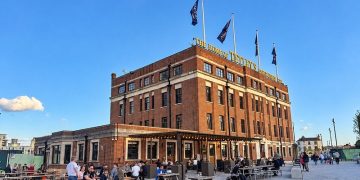
I made this cake for the first reunion of UK Volontaires at the Paris Olympics 2024, held in London on a damp, dreary afternoon recently. We were all keen to share photos and relive our experiences of an amazing summer. The Damp Gingerbread was still slightly warm in the tin when I offered it round at our event – all gone within two minutes. That must count as an Olympic record!
So, nothing wrong with Damp Gingerbread – perhaps it has the right name after all. As the song nearly goes:
Oh, the weather is damp and dreary
But the cake is warm and cheery …
Enjoy and keep safe in the wintery weather.


CLICK HERE TO DONATE TO OUR CROWDFUNDER
HELP US BECOME STRONGER SO THAT WE CAN CONTINUE TO DELIVER POWERFUL CITIZEN JOURNALISM!