Article updated 09.02.23. We previously stated that Cllr Mason had only registered his interests and recused himself from the vote once challenged by residents. In fact, although residents were not aware of this, Cllr Mason had formally registered his interest as an employee of the school. Once challenged about his intention to vote, he stated he was taking legal advice. He subsequently recused himself from the vote but retained the right to speak at the meeting.
Westminster Road, The Avenue and Greencliffe Drive; three quiet residential streets culminating in a cul-de-sac with footpaths down to the Ouse riverbank path overlooking the playing fields of the well-known public school, St Peter’s. This quiet neighbourhood is fairly unremarkable, yet it is cherished by its residents for its sense of community and position alongside the last remnants of the riverside Ings, and last section of green belt, before the outskirts of the city proper begin. But all this could soon change, thanks to a development plan from the local school.
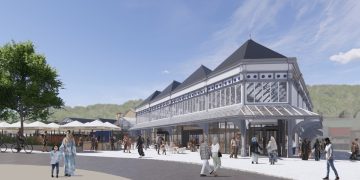
St Peter’s School, York and the proposed development
The area in question abuts a site of special scientific interest (SSSI) with abundant wildlife including four species of bat, migratory birds, at least two species of owl, abundant flora and fauna – including the extremely rare, iridescent Tansy beetle for which the Ouse Bank Ings is one of the few remaining habitats in the country.
Walking at night here is a unique pleasure. Despite being so close to the city centre; there are no lights along the river path, no streetlights and no floodlighting. Indeed, so much so that it is still classed as lighting zone E2 (rural, small village) which makes it possible to admire the huge full moon or star-gaze almost as though one were in the country.

Alas, this sense of peace and tranquility was rudely shattered late last summer when St Peter’s School, after a minimal, cursory ‘consultation’, suddenly hit the neighbourhood with a massive development plan for the whole area. Cynically, the school attempted to sell this plan as a traffic chaos reduction method – the ‘chaos’ being created by their own activities in the surrounding streets – though it was primarily to provide a commercial sports centre for themselves and others.

An income stream for the school but with many adverse impacts on the area
The plans (which would see Westminster Road being turned from a closed street into an access route for coaches and cars) have attracted more than 120 letters of objection from residents, as well as objections from Sport England, the Environment Agency, the city ecology officer and National Highways.
Supported by York Central MP Rachael Maskell and councillors, residents say the plans could cause traffic chaos, as well as being detrimental to the environment and infringing on their privacy, amenity and enjoyment. It’s likely there will be sporting noise until 10pm, extra traffic congestion, light pollution affecting wildlife and residents, as well as poorer air quality. The potential increase to flood risk is also barely considered by the school’s proposals.

The school’s own website and the vision statements in the planning application talk about needing to develop an improved “income stream”, suggesting that the development is commercial rather than educational. The submission also talks of festivals and tournaments all year round, with the ensuing traffic and noise till late at night.
Parents think they will be able to park here; but all the analysis (National Highways plus residents’ own traffic consultants) say it is ‘unproven’ or will make the situation worse for the surrounding streets (including main roads). City of York council (CYC) is asking for a fuller, more complete analysis and projection of traffic flows – which is yet to be forthcoming.
Difficulties in challenging a powerful institution
What residents had failed to appreciate from the start were the difficulties in challenging a large and powerful institution with well-laid plans. A number of things are alarming about this situation.
Firstly, the school asserts as facts that which it would like to be true
- For instance, it states that there will be no increase in school traffic despite applying to be open for “sports clubs, tournaments and festivals” ALL year until late at night, not just for term-time drop-off and pick-up.
- The information in the plans flies in the face of Environment Agency designation, asserting the new flood barrier means it is in zone 2, not zone 3.
- The school insists the site can have floodlights because it is in E3 (town centre), not E2 (semi-rural).
- The submission assumes that any external use equates to ‘community use’, though residents say they are unable to use ANY facilities such as the existing pool.

Failure to consult
There has also been a failure to adequately consult. Worryingly, there are now statements on the school’s own website saying that phase one of its ambitious expansion plans is now live, soon to be followed by phases two and three. This is even accompanied by a job advert for an events manager.
The school has pressed on, regardless of having failed to reach out to clearly very concerned locals, politicians and statutory bodies. Instead, when the local objections came pouring in, the school rallied parents to register support comments on the planning portal, advising them to not register their addresses in order to hide their far-flung locations.

Removing green belt status
The summer before any plans were submitted, St Peter’s School challenged the council on its meticulously documented green belt status, with legal advice up to KC level, at a local plan consultation submission. This would appear to have been part of a concerted, long-term strategy to remove as many barriers as possible.
It was concerning therefore to find out that after more than eight years in development, local planning inspectors had at the last minute suddenly visited St Peter’s School, before any others in the city, and recommended the removal of green belt status from the land in question.
It was also distressing for local residents and those opposed to the plans, when they realised that the chair of the school governors, Bill Woolley, is a former deputy leader of CYC and ex-head of strategic planning. Added to this was the discovery that one of the executives eligible to vote on the green belt proposals was Councillor Ashley Mason, the health services manager at St Peter’s School. Once residents became aware of this conflict of interests they challenged Cllr Mason about whether he still intended to vote. He told them he was taking legal advice. In the event he recused himself from the vote while reserving the right to still speak at the meeting.
The initial proposals, unsurprisingly, were rubber-stamped at the executive meeting despite residents’ and ward councillors’ objections and is soon to be out for public consultation.
It is worth noting that CYC is a Liberal Democrat/Green Party coalition and that they make up the entirety of committees such as the executive mentioned above. Their stated ambitions are to create a ‘15-minute city’ and their local plan specifically discourages development that may lead to increasing traffic in the city, and especially into residential areas. It is, therefore, utterly contradictory for CYC to be removing green belt from a highly sensitive area and entertaining the possible development of said land into a commercial sporting enterprise and car park.
So what now?
Residents angered by the school’s indifference to their feelings, and their attempts to play one community against the other, have reached out to the wider community and have established supporters in all the streets surrounding the school. They are determined to oppose the application, and to highlight the need for a holistic, sustainable traffic plan for the school; the only city-centre school without a traffic plan showing how they intend to reduce the reliance on vehicles.
Two other parties – the local ward councillors and Sport England itself – have also expressed a willingness to refer this matter to the secretary of state for levelling up, housing and communities if CYC appears minded to approve. So the battle goes on.
Despite the fear the community feels over the insidious threat from powerful institutions and vested interests, they are remaining positive and determined to uphold their democratic rights, their ability to shape their own future, and that of their city and environment.