• Contact
  • About
  • ISSN 3049-9720
  • Authors and editors
NEWSLETTER SIGN UP
Yorkshire Bylines
Advertisement
  • Home
  • News
    • Brexit
    • Culture
    • Education
    • Environment
    • Home Affairs
    • Transport
    • World
  • Politics
  • Opinion
  • Society
    • Food
    • Music
    • Poetry
    • Sport
  • Business
    • Economy
    • Science and Technology
    • Trade
  • Region
No Result
View All Result
Yorkshire Bylines
Home Region

To refuse to kill is a cause worth dying for: remembering the Richmond Sixteen

Scratched on the walls of Richmond Caste in North Yorkshire is graffiti that tells the story of 16 men imprisoned and sentenced to death for their beliefs

Jane Dawson by Jane Dawson
08-11-2020 10:00 - Updated on 11-09-2024 16:25
in Region
Reading Time: 5 mins read
A A
Richmond Castle

Image by Dylan Moore for Creative Commons

Share on Bluesky

In 1916, 28-year-old Norman Gaudie, a well-known northern footballer and a Quaker, was imprisoned without fair trial in Richmond Castle. With him were 15 others who refused to fight in WWI, their crime – believing it wrong to kill another person. The gaolers bullied and humiliated the prisoners. On one occasion, they were frog marched through the town. Returning to the castle in a ‘bloodied’ state, they were forcibly stripped and dressed in military uniform. In their freezing, squalid stone cells, they whiled away the hours drawing on the walls. Norman and the other prisoners are known as the ‘Richmond Sixteen’.

Image description: Graffiti by one of the Richmond Sixteen, a smiling woman in formal attire
Drawing by Howard Marten of Norman Gaudie’s mother. Photo credit: Jane Dawson

In the days before the declaration of WWI, millions of people took to the streets to oppose the war. The government ignored all forms of protest. Military propaganda, or perhaps we could call it fake news, persuaded two and a half million men to join the British Armed Forces. By the end of 1915, so many men had died in the trenches, the government decided to introduce conscription.

The Military Service Act 1916 conscripted healthy men between the ages of 18 and 41. It included an amendment by Yorkshire Quaker MPs Arnold Rowntree and T Edmund Harvey. The amendment allowed exemptions on the grounds of individual conscience. Those claiming exemptions were conscientious objectors, or COs. Local tribunals were set up to judge whether an individual’s conscience was true. These courts, made up of military men and local dignitaries, ridiculed those whose religious or moral beliefs differed from their own. The tribunals forced many COs to work for the war effort in ‘non combatant’ roles, such as manufacturing weapons.

For Norman Gaudie and the other 15, there was no choice, they could not support the war effort; their consciences prevented it. In Britain, around 1,000 men refused to take alternative war work. They were arrested, court-martialled and imprisoned.

Fifteen million people died during WWI. Today this catastrophic death toll is acknowledged as a failure of leadership. Following the military losses in the first years of the war, Lord Kitchener determined to make an example of the CO ‘shirkers’. He ordered the men moved from Richmond Castle and shipped to the frontline. In France, they would be on ‘active service’ and liable for the death sentence for any refusal of a direct military order.

Once in France, Norman and the other COs continued to disobey military orders. They were kept in foul conditions, and subjected to psychological manipulation. For hours at a time they were hung on a fence with arms and feet tied, resembling the crucifixion. Repeatedly they were marched onto the parade ground to face a firing squad, before being returned to their cells.


More from Yorkshire Bylines:

  • Food poverty is everywhere in 21st century UK by Jane Dawson
  • Yorkshire isn’t ready for two national emergencies at once by Jane Thomas
  • Norky’s ramblings: more mills of the sixties by Peter Norcliffe

Norman’s friend and fellow prisoner, Howard Marten wrote of the experience:

“The military authorities didn’t know quite how to react. It was something quite outside their experience. And it became clear that we weren’t people that could be bullied”.

On 13 June 1916, in front of hundreds of troops, they were finally court marshalled by a field general and sentenced to death by firing squad.

But that is not the end of the story. In a remarkable twist of fate, the driver of these men’s destiny, Lord Kitchener, drowned in the sinking of the Lusitania. This paved the way for a petition to the prime minister by York MP Arthur Rowntree, which gave a last minute reprieve for Norman and the other COs.

Norman Gaudie, the Richmond Sixteen, and the other COs are more than a footnote in history. Their bravery in face of bigotry and religious intolerance led to the individual freedoms we enjoy today. Conscientious objection to bearing arms is now an internationally recognised human right.

This year we’ve learned to treasure our fragile, hard won freedoms. Today, as we remember all those who have died for our country, spare a thought too for the men prepared to die because they valued the lives of others above their own. Their sacrifice gave us the legal right to a conscience and the freedom to enjoy it.


Sign up for the Yorkshire Bylines newsletter

* indicates required

Consent for having Bylines Network store my submitted information

You can unsubscribe at any time by clicking the link in the footer of our emails. For information about our privacy practices, please visit our website.

We use Mailchimp as our marketing platform. By clicking below to subscribe, you acknowledge that your information will be transferred to Mailchimp for processing. Learn more about Mailchimp's privacy practices.

Jane Dawson

Jane Dawson

Jane hails from rural North Yorkshire, but has lived all over the world. She moved to London to work for a thinktank and to bring up her family. Jane is now head of external affairs for ECA, the Electrical Contractors’ Association. Her interests stretch from politics, the arts and literature, to yoga and the natural world. She is passionate about mitigating the effects of the climate crisis.

Related Posts

The Tricolor team standing outside their storefront on Church Street
Economy

Is York’s flagship business incubator still working?

by Gabriel Macarthur
7 November 2026
Architect's imagining of the new Dewsbury Market development.
Region

Dewsbury Market: a place where the town has always come together

by John Heywood
5 November 2026
Todmorden Book Festival Logo
Culture

Todmorden Book Festival welcomes literary heavyweights

by Kay Johnstone
4 November 2026
The Milner York's The Garden Room
Food

Review: A Night at The Milner York Hotel

by Graham Clark
3 November 2026
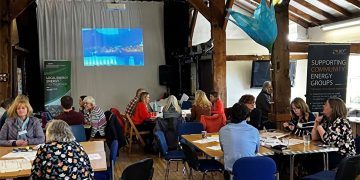
People gathered in a decorated hall for Tadcaster Climathon
Environment

North Yorkshire villages take energy into their own hands

by Kay Johnstone
31 October 2026
Next Post
Sheffield Town Hall

A tale of three Yorkshire lord mayors

PLEASE SUPPORT OUR CROWDFUNDER

BROWSE BY TAGS

Art Books Boris Johnson Bradford Charity Climate Change Cost of Living Covid-19 Creative Industries Crime Democracy Devolution Donald Trump Environment Equality Experience Farming Festival Gaza Conflict General Election History Human Rights Immigration Iran Journalism Keir Starmer Labour Leeds Media Mental Health NHS Northern Ireland Protocol Pollution Poverty Recipe Refugees and Asylum Seekers Restaurants Retained EU Law Review Rishi Sunak Sheffield Theatre Travel Ukraine USA
Yorkshire Bylines

We are a not-for-profit citizen journalism publication. Our aim is to publish well-written, fact-based articles and opinion pieces on subjects that are of interest to people in Yorkshire and beyond.

Yorkshire Bylines is a trading brand of Bylines Networks Limited which is separate to, but allied with, Byline Times.

Learn more about us

No Result
View All Result
  • About
  • Authors and editors
  • Complaints
  • Contact
  • Donate
  • Letters
  • Privacy
  • Network Map
  • Network RSS Feeds
  • Submission Guidelines
  • Download the Bylines Network App

© 2020-2026 Yorkshire Bylines. Powerful Citizen Journalism. ISSN 3049-9720

No Result
View All Result
  • News
    • Brexit
    • Education
    • Environment
    • Health
    • Home Affairs
    • Transport
    • World
  • Politics
  • Opinion
  • Society
    • Culture
    • Dance
    • Food
    • Music
    • Poetry
    • Recipes
    • Sport
  • Business
    • Economy
    • Science and Technology
    • Trade
  • Region
  • The Davis Downside Dossier
  • The Digby Jones Index
  • Cartoons by Stan
  • Authors and editors

Newsletter sign up

CROWDFUNDER

© 2020-2026 Yorkshire Bylines. Powerful Citizen Journalism. ISSN 3049-9720