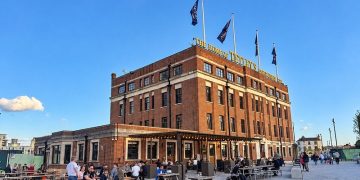
In towns and cities around the world, deep in the back alleys, down small side-streets, you’ll find the underground music scene and the venues that make it special. Grassroots music venues (GMVs) could be just a scrappy, self-built stage where unknown names might become tomorrow’s next big thing. Yet, from dive bars with sticky floors where teens enjoy their local favourites, to bingo halls where parents enjoy cover bands playing the classics, these venues are what make the music scene. But, with more and more closing by the day, are grassroot venues still as valued as we like to think?
A grassroots music venue is typically an independently run, often pretty small, venue or building that often marks the start of someone’s musical career. Unlike the majority of corporate-owned buildings that focus heavily on ticket sales and profit, these venues thrive on community involvement and are focused on building a platform for less well-known artists to make their break into the industry, offering a home for music genres with a local following, as well as trying to encourage the flourishing of artistic creativity in its purest form.
The crisis facing grassroots venues
Within the last ten years, these grassroot venues have come under a lot of pressure, due to a combination of economic and political constraints that have grown over time.
According to the UK’s Music Venue Trust, there have been over 100 GMVs that have had to close their doors, which equates to around 15% of the entire grassroots network across the UK. Many other venues are increasingly facing the same issues that have forced others to shut.
One of the biggest issues that venues are facing is from the gentrification of their local areas Gentrification occurs when previously affordable areas become the latest fashionable hotspots for modernisation, causing an increase in property values and rent prices, as well as a gradual displacement of the original residents.
Because grassroots venues often work on fragile margins, often as a result of cumulative cuts to previous government or local authority funding, they are unable to keep pace with increasing rent prices. The larger corporate music venues and companies tend to have the financial ability to adapt to changes in the local area.
Noise annoys: the weapon of complaint
Another growing issue for GMVs within gentrified areas, is the issuing of noise abatement complaints to local councils. Complaints about noise have become a major weapon against GMVs. Ironically, as new residents move into upcoming areas attracted by the existing cultural atmosphere, they may also become the same people who complain about the noise, about the sounds that have defined these areas for years, even possibly decades. Local councils decide on the complaints, often taking the side of residents or developers, leaving GMV’s vulnerable to facing financial and legal difficulties as they try to fight against the rulings.
The Leadmill, Sheffield: a symbol of resistance
One GMV fight that’s been major news in recent years is at The Leadmill in Sheffield. The venue that opened back in the 80’s, had been graced by the likes of Sheffield’s finest, the Arctic Monkeys, Pulp, and Bring Me The Horizon, as well as stadium favourites like Oasis and Coldplay. But in March 2022, the landlords issued The Leadmill Ltd, the team running the Leadmill, with their first eviction notice in what would become a 3-year battle, creating a huge backlash from fans and artists alike.
Now, although the eviction doesn’t mean the loss of the actual building itself, the community that surrounds the Leadmill, the fans that bought tickets and the artists that played there are losing the thing that brought them all together. The eviction notice brought about the “#SaveTheLeadmill” campaign, backed by artists such as Liam Gallagher, Frank Turner, and Alex Turner, with some of these artists highlighting the issues of GMVs losing their community input. However, as of May 2025, The Leadmill team announced that they had lost the battle and would be vacating the building.
The fight for the Leadmill brought light to a growing trend in GMVs, of landlords not seeing beloved venues as a need for the community, but as something to make them a profit. But the battle to save The Leadmill did raise questions about ownership of community spaces and what defines a cultural landmark.
Boom, Leeds: gone but not forgotten
Another tragic loss came in 2024, with the closure of Boom in Leeds – a DIY venue cherished by the city’s punk, hardcore, and metal scenes. Known for its gritty atmosphere and uncompromising commitment to underground music, Boom was more than a venue; it was a community hub.
Its closure came after years of financial strain, compounded by the aftershocks of COVID-19 and lack of council support. Despite a loyal fan base and multiple crowdfunding efforts, Boom could not withstand such economic pressures. Its disappearance left a huge gap in Leeds’ alternative scene, especially for younger artists and fans.
Boom’s closure reveals another aspect of the GMV crisis: not all venues can generate the public outcry thatThe Leadmill did. Smaller, genre-specific spaces often fly under the radar – until they’re gone.

Why these closures matter and how to fight them
Losing GMVs is about more than just losing local venues, it affects the community that is involved in using these spaces. Local music scenes have a major role to play in youth development and diversity. They provide a space for voices and genres that are underrepresented, especially for LGBTQ+ artists, artists from different ethnicities, or experimental music genres that might not fit easily into existing genres. Many young people start to find their identity and a sense of community through the local music scene in their area.
While venue closures can cause anger and dismay, there are still reasons to maintain hope for the future of GMVs as, across the UK, advocacy groups are forming and petitions are being signed to try to preserve venues that are seen as vital to the life of live music.
Changes are being made to try and maintain grassroots venues around the UK. One of the key influences has been the ‘agent of change’ principle, which requires a developer complaining about local noise to construct and insulate their buildings in order to minimise and/or eliminate the impact of the sound from nearby venues. In this way, it is hoped that new developments may be able to co-exist better with existing businesses.
Advocacy and public ownership can work
Artist and audience advocacy, as seen at the Leadmill, can also be effective. Well-known artists who may have begun their career at, or played at a particular GMV, speak up about the threats facing the venue. High profile support by artists and their fans, who buy tickets and attend shows, could possibly alter the outcome for a venue.
Another possibility is that local communities or artists could buy shares in a venue as a way to keep the venues alive. Brudenell Social Club in Leeds has been community-run since the ‘80’s, and King Tuts Wah Wah Hut in Glasgow is owned and managed by DF Concerts, one of Glasgow’s main music promoters .
Saving the soul of music
The closure of grassroots music venues isn’t just a story about the buildings themselves —it’s a story about culture, opportunity, and identity. The Leadmill and Boom both represent two sides of the same coin: one fighting to survive, the other already gone. But both are reminders that music doesn’t start in large stadiums with thousands of fans: it starts in sweaty rooms, tiny bars, and back-alley stages playing to 30 people who just want to enjoy the tunes.
If we want a vibrant future for music, we have to protect the spaces that give it life – before the last chords fade and the lights go out for good.