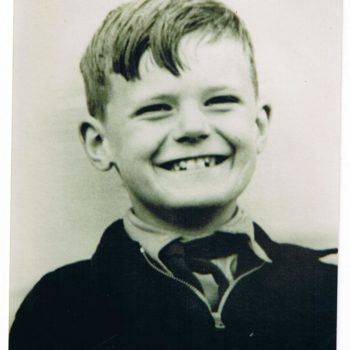

One of the outcomes following my innocent and naive transition into the adult world in the early 1960s as described in the recent rambles ‘Cuban Missile Crisis and the Moors Murders’ and ‘Mills of the sixties’, was the realisation that my parents would not always be there to look after my best interests.
Much of the evil and dangerous world of the adult was new to me and, though the shifty shenanigans of our political leaders were still unknown to me and inconceivable, by the mid to late 1960s I was already becoming a hardened cynical adult with a chip on both shoulders and a willingness to distrust and dislike authority. My earlier lack of education and the poor teaching methods of the time had set the scene, but I hadn’t yet lost all faith; I just centred my dislike on school and teachers, while the rest of my life was very happy.
A growing cynicism
As I grew older, cynicism began to gnaw into my mind and I, like many people in their teens, could not understand why politicians and authority figures in general were so blind to the obvious truth. Consequently, I began to rebel against the establishment. I fell out with family members who had authority, I rejected the religion of my parents and indeed found fault with all religions, and I was convinced that all my bosses were wrong. None of this did me any good, of course; nor did it help my relationship with other adults. The only company I felt comfortable with was that of my peers.
With the help of my wife Moi and our daughter Rachel I became a relatively stable member of the community, although for quite a time I couldn’t settle into one job. This was often because many of the textile mills where I worked at the time were shutting down, but I fell out with my bosses on many occasions and there was only one winner there. However, I always managed to bring money into the home. By mid 1970s I had eventually settled into a job at Brook Motors which lasted seven years and which turned out to be the longest I have worked as an employee.

Becoming more accepting of others’ beliefs
I began to realise the importance of family. I stopped this silly anti-religious attitude that I had been cultivating and recognised that religion provided comfort and solace for millions. The architecture is magnificent and they are often the only reliable source of historical local records. Plus, I have always liked to sing a good traditional hymn.
However, even though there is, and probably always will be, a need for religion and I now respect all religious beliefs, I still have one stumbling block, and I thinks it’s a big one, I cannot bring myself to believe in a divine being, nor in heaven or hell, and some of the Old Testament stories in the Christian Bible seem to be designed to convince children that there is plague and pestilence awaiting the innocent and a bogyman is lurking in every wardrobe or under the bed.
Q: What does a dyslexic, agnostic, insomniac do?
A: Stays awake all night wondering if there really is a dog.
In my humble opinion life is like a play, we enter without rehearsal, live out the bit part for a period of time that science and nature has deemed fit to allocate to us, then we leave the stage and have little influence in the world again. If we are kind, sociable and skilled enough, sometimes in small humble ways while we are here we will do more good than harm. But I think it wonderful that I live in a country where we can worship any God we want or none at all in peace and harmony for the most part.
A monster arrives on the scene
In my own family life, all seemed to be trundling along nicely. I had a happy marriage, a healthy young daughter, a mortgage and a job. Then into our community in the late 1970s came a monster in the shape of Peter Sutcliffe.
Suddenly, we were being advised to suspect every man and woman in the street and, even more damaging, we were advised to suspect the people in our own families. This created a horrible atmosphere of distrust and doubt.
The police, in particular Godfrey (George) Oldfield became obsessed with a recording sent to them by an idiot claiming to be the ripper. The hoaxer had a Geordie accent, and the police became blinkered, to the extent that they took this recording to every pub and club around Yorkshire. We were also allowed to assume that his victims were prostitutes, and so the logic was that if you were not a prostitute then you should be safe. All this turned out to be wrong, and even though Peter Sutcliffe was questioned nine times by the police, he was allowed to carry on because he didn’t have a Geordie accent.

A desperate search ended by a routine traffic stop
At one point, a witness had said that they had seen a Ford Cortina leaving the scene of one of the murders. That narrowed the search down to the approximately two million Cortinas had been sold In the mid-1970s, making it the best-selling car of the time … I myself was interviewed by the CID (criminal investigation department) while I was looking after my parents’ house. They said they were looking for my brother who their records showed owned a Ford Cortina.
This search for a particular Ford Cortina formed part of the increasingly desperate need for any credible evidence. It was on the national news daily, so the whole country knew about the Yorkshire Ripper, but all the police had to go on was their attempt to link a Geordie accent to a person who may or may not live in the North East with one of two million Ford Cortinas and Bob’s your uncle …
The killer was caught in 1981 thanks to the diligence of a probationary (first two years) constable – Robert Hydes, a South Yorkshire bobby – who was carrying out routine traffic stops investigating false number plates. He and accompanying Sergeant Robert Ring, using their intelligence and common sense, had spotted something dodgy about one driver. Together they had found the Yorkshire Ripper. Despite millions of pounds being spent on blindly running about chasing false leads, it was a routine traffic stop in Sheffield that put an end to the biggest and most expensive manhunt in British history.
Lasting bitter memories – but a lighter note to end
I resented this character having the same Christian name as me and also resented him coming from Yorkshire. He carried out 13 murders and seven attempted murders between 1975 to 1980. I am familiar with his hometown of Bingley and the site of two of his murders in Huddersfield and Halifax. Together with the distrust this investigation generated within the community at that time, it has left a lasting bitter memory.
The terrible episode came back to mind during the recent Covid lockdown periods, a time with a similar atmosphere of fear and distrust which I think it will also take us a while to recover from.
This story needs a lighter note, which happens to involve the aforesaid Ford Cortina.
A little old lady complained at her local police station saying that a man was exposing himself in a car parked next to hers.
The desk sergeant who was taking her statement said, “This next question may seem odd, but we need to ask so we can ascertain what offence he may have committed, so are you able to tell me if he had an erection?”
“Oh no” said the little old lady “I think it was a Cortina”.