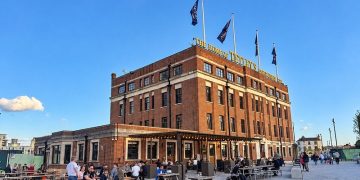
Dalton Mills, built back in 1869 by Joseph Craven, was once a working mill providing jobs for around 2,000 people in its prime. In more recent times, it has been better known as a set for period films and TV shows such as Peaky Blinders. It has also been used for The Great Train Robbery, Downton Abbey, and the 2016 film The Limehouse Golem. Unfortunately, the historic Grade II listed building has been the subject of multiple fires over the years and is now derelict.
The first fire occurred in 2011 when metal thieves who had entered the building to steal cables caused the blaze. Then again in 2022, two young males were arrested and charged for causing a fire. Most recently, in June 2024, a fire occurred on the third and fourth floors of the building, for which no one has been arrested or charged. Ten fire crews, backed up by an aerial appliance, attended the historic site. West Yorkshire Fire and Rescue Service said the building was “40 percent involved in fire”.
Photographing the derelict Dalton Mills
As a photographer I have a passion for the art of capturing historic derelict buildings, the stories they hold, and the artifacts that remain. So I visited Keighley to take a look at Dalton Mills.
As soon as I walked onto the grounds and into the courtyard, I could see fire brigade tape cordoning off the area and smell the scent of a recent fire in the air. I was fascinated, as I had come here to just photograph this historic building. I didn’t realise that these recent events had occurred.
With curiosity and caution, I went behind these taped-off lines and entered the building, unaware of what might lie ahead. As I walked in, I entered a room like an open-plan kitchen with hardware left abandoned all over the place – from old car parts and small hand tools to even larger, more industrial equipment. I was in awe at all these pieces of equipment just sitting here collecting dust when the majority of them could be put to everyday use.

Onwards and upwards
Once I had explored and photographed the ground floor, I moved on to the first and second floors, both quite alike. Each floor had previously belonged to businesses, one being a dance studio with mirrors all around the room, poles in the centre, and photos of the dancers just left behind. The other was an architect firm with leftover desks and chairs as if all the design of new buildings had just been forgotten about.

Much like the ground floor, I was amazed at how firms just leave bits and bobs which to most people could be used in daily life but were just discarded as waste. Could locals perhaps organise a charity event and sell any of the discarded items to help the local community, or attempt to put them to use themselves?
Onto the third floor now, where I could smell the fire as if it had just been put out. The smell was so prominent it stuck to my clothes! On entering the third floor, I could see burnt ceilings with wires and nails starting to fall through. Floors had become damp and soggy due to the large amount of water the fire brigade had to use to put the fire out and there were smoky burnt walls from the most recent blaze, so I dared not step another foot inside for my own sake.

Back up the stairs to the fourth floor – the clock tower – which used to be apartments. Dead ahead of me were signs of fire along the corridor, but to the right, the first apartment looked to be quite structurally sound, so I went in. Immediately there were signs of squatting with graffiti on the walls, questionable stains on the floors and window ledges, and a great amount of vandalism. I wasn’t sure if I was alone, so I took the photos I deemed necessary and left the building as I found it.
Keeping history alive
This is a passion for me. Inevitably these buildings will either be restored into more modern designs like flats, office spaces, etc. or over time they’ll be vandalised and eventually crumble into rubble. These buildings once held host to 100s if not 1,000s of workers/tenants, each person with a different story, each person representing something in that moment in time.
I believe it’s important we try and keep these buildings alive so we don’t forget how far we’ve come in such little time, so we don’t forget the beautiful architecture of these listed buildings. I hope this building does get reused and turned into a modern premises with an old-style antique look instead of sitting for years waiting to inevitably crumble into dust.

CLICK HERE TO DONATE TO OUR CROWDFUNDER
HELP US BECOME STRONGER SO THAT WE CAN CONTINUE TO DELIVER POWERFUL CITIZEN JOURNALISM!