Artificial pitches, what a great idea! No more maintenance, no more closures due to bad weather, no more rationing of use due to wear and tear, no poisoning the environment with toxic fertilisers; all good, yes? Especially if you want a handy commercial income-stream from year-round lettings and festivals.
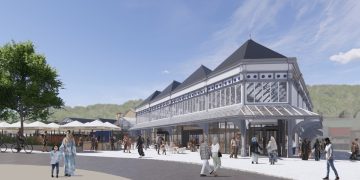
So, I could understand St Peter’s, the public school at the end of my quiet cul-de-sac, wanting to replace the ancient water meadows forming part of their playing fields with the development shown above… despite my misgivings, and those of my fellow residents, as to the scale and appropriateness of the proposals.
Researching the issues involved, however, I was struck by the growing concerns over artificial surfaces and started wondering why several states in the USA, as well as the EU, were placing restrictions on their construction and even considering total bans. Here are just a few of the reasons, some of which you may find a little alarming.
User health risks
It is well-documented that artificial turf causes far more injuries to users than grass. Although newer versions are better at mimicking natural grass, the cushioning is never as good, and the traction much greater, with the result that more joint-related injuries occur, not to mention some quite severe friction burns… even if it is possible to constantly sprinkle the pitches with water. This technique also helps address another problem; they overheat in hot weather, so much so, that they would be unusable in the summer with weather anything like that in 2022 when there were hosepipe bans. This is the conclusion to a report in the British Journal of Sports Medicine:
“In matches, the incidence of serious injuries was significantly higher on artificial turf. Ankle sprain was the most common type of injury (34% of all acute injuries), and there was a trend towards more ankle sprains on artificial turf than on grass.”
More alarming is a report from the USA where six former players at American football team, the Philadelphia Phillies, died from a rare brain cancer linked to artificial turf they played on; these have all now been removed and several states are instigating restrictions and bans.
Even if the more modern pitches planned by St Peter’s no longer contain rubber crumb, made from old tyres, they still contain a rubber layer under the turf and the ‘grass’ itself is plastic. These can and do contain PFASs, forever chemicals, which can enter the bloodstream of users via wounds and grazes, be breathed in and also, of course, contaminate the surrounding environment via wind-borne particles or run-off from rainfall. No level in drinking water is considered safe.

Destruction of biodiversity
What is not immediately realised by many of us, is the fact that artificial pitches destroy far more than just a layer of grass; they create a biodiversity desert by removing and suppressing all the associated flora and fauna in the natural grass and subsoil. All turf would be removed and the top 18 inches removed… there would be nothing natural left at all; one might just as well concrete the whole lot.
The number of organisms in a natural grass field is vast, and an invaluable resource for the local fauna; it will be a huge loss to birds, bats, amphibians and hedgehogs. These ancient water meadows are also still used by migratory birds but this development will remove this possibility totally.
Environmental damage and toxic pollution
Closely related to the above points, of course, is the effect of all this on the local environment. The school (which has persuaded the government local planning inspector to redesignate this land from green belt to educational) is within a zone 3 flood zone and right next to the Rawcliffe Ings, a site of special scientific interest. There is a clear risk from PFASs, as well as microplastics from tyre wear via the new car park, entering this highly sensitive environment.
As it is right next to the Ouse, the potential scope for pollution, especially during flood events, is extremely high, with contamination possible up toward Rawcliffe as well all the way down to the Humber estuary and beyond. If there is drinking water extraction this would be a risk to human health as well as severely damaging local wildlife.
Plastic pitches are basically huge polyethylene, polypropylene and nylon carpets weighing several dozens of tons; they are not recyclable (mixed materials), only last 8-10 years and end up in landfill. Ripping up and disposing of one is fraught with the risk of further contamination via microplastic degradation. Is this REALLY a better idea than a natural grass pitch?
Increased flood risk
Natural grass soaks up vast amounts of water and helps prevent flooding; the school plans water permeable tarmac and artificial pitches… but there is nowhere for the additional wastewater to go because they will have removed 18 inches of turf and soil. They cannot drain these pitches into the Burdyke culvert (crosses the site) which discharges into the river Ouse as it is at capacity. Their revised idea to have huge soakaways has also been rejected by the Environment Agency as the subsoil and rock is already saturated; there is nothing to soak away into! So, this development would inevitably increase flood risk locally if allowed to go ahead. And what is the point of an all-weather pitch if it is under water?

Higher maintenance costs
Artificial turf is not self-cleaning as natural grass is; it needs constant brushing, washing and even hoovering. This is much more intensive, time-consuming and expensive than caring for natural turf. Also, unlike the pitches they plan to replace, artificial ones need replacing every 8 years or so, depending on intensity of use, which is extremely expensive and adds hugely to their already massive carbon footprint. Their environmental impact, and maintenance costs, would also be hugely impacted if water spraying systems were needed or installed.
Limits the activities possible
If you construct a dedicated, artificial hockey pitch, then you end up with a hockey pitch you can use for very little else. Eight acres of natural grass, however, can be used for whatever sport one can think of; football, rugby, cricket, athletics, tennis and, of course, hockey itself! Sport England, in their assessment of the school’s plans, pointed this out and questioned the whole rationale behind the proposals:
“… where they result in the loss of grass playing field, it is essential that there are sufficient benefits to the development of sport as to outweigh the detriment caused by the loss of the playing field. This is because any area of a grass playing field can be used for sporting purposes covering over 15 different sports whether competitively or for general training/skills sessions. A hockey pitch, tennis/netball courts and cricket nets are fixed structures with fixed dimensions, only suitable for a limited number of sports. They can’t be moved around and resized to cater for changes in sport over the years.”
They fail to mention, however, that the car park and machine store will also engulf at least three acres of the eight-acre site.

In conclusion
So, artificial pitches; still think they are a good idea? Well, in some instances they could be, but in others they really are not. This proposed development by St Peter’s is, unfortunately, one of the latter; too great a loss of biodiversity, sporting possibilities and increased flood risk, to name but a few of its drawbacks. Artificial by name, artificial by nature, this development would have the most enormous carbon footprint, working so much against the current zeitgeist as to beggar belief. Let us hope that all the negative reports by statutory consultees, objections by local residents and politicians have the desired effect and the application is refused or forces the school to reconsider and put forward more sensitive plans in the future.
Photos of the site as it is at present with an eight-acre area of ancient grass playing fields and a similar amount of the Green Belt that the school have already covered in artificial surfaces.