• Contact
  • About
  • ISSN 3049-9720
  • Authors and editors
NEWSLETTER SIGN UP
Yorkshire Bylines
Advertisement
  • Home
  • News
    • Brexit
    • Culture
    • Education
    • Environment
    • Home Affairs
    • Transport
    • World
  • Politics
  • Opinion
  • Society
    • Food
    • Music
    • Poetry
    • Sport
  • Business
    • Economy
    • Science and Technology
    • Trade
  • Region
No Result
View All Result
Yorkshire Bylines
Home Politics Constitutional Affairs

Why the UK should stay signed up to the ECHR

Though anti-ECHR voices say otherwise, the convention, and its court in Strasbourg, guarantee crucial protections for British people

John Cole by John Cole
14-03-2024 16:36 - Updated on 15-03-2024 07:25
in Constitutional Affairs
Reading Time: 6 mins read
A A
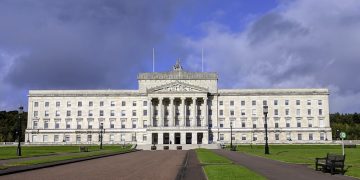
The ECHR building in Strasbourg

image by Erich Westendarp. Pixabay royalty free

Share on Bluesky

In the aftermath of the second world war the leaders of western European democracies sought to establish structures to protect democracy and defend human rights. The drafting of the European Convention on Human Rights (ECHR) was completed in 1950 and made available for states to sign.    

A prime mover in establishing the ECHR was the former UK prime minister, Winston Churchill. The European Court of Human Rights (ECtHR) was set up in 1959 as part of the structure, to adjudicate on human rights cases and interpret the convention. In 1998 parliament passed the Human Rights Act, which gives effect to the ECHR in UK law.

In recent years there have been calls from some of those on the right of the Conservative party for the UK to opt out of the convention. In their view this would stop the court at Strasbourg “meddling” in UK politics.

In the past, there have been, for example, altercations between the court and the Westminster government on the question of stripping prisoners of their right to vote in elections. More recently, the court incurred the wrath of Suella Braverman and her coterie when its interim injunction put a last-minute halt to a planeload of asylum seekers being sent to Rwanda.

The present government consists of the flotsam and jetsam of the 2019 ‘Get Brexit Done’ election. Its mindset is one of the primacy of UK sovereignty – that we had to get out of the EU to avoid being ruled by Brussels and its European Court of Justice. By the same token, goes the argument, we need to get out of the Council of Europe and its Strasbourg human rights court. The government’s prejudices are all of a piece.

A court in Europe … with vital protections for British people

In answer to the question of how the UK has benefitted from the ECHR, a most helpful briefing note by Sir Jonathan Jones makes the following point:

“It has profoundly influenced the protection of rights in the UK – in areas including the treatment of [the LGBTQIA+ community], corporal punishment in schools, the protection of journalistic sources and the treatment of internees in Northern Ireland.” 

Jones goes on to say:

“Every time the government loses a case in the European Court of Human Rights in Strasbourg (or indeed in our domestic courts under the Human Rights Act) it is being told to do something it would rather not do, or vice versa.

“But whatever the home secretary, Suella Braverman, may say, it is not just criminals who benefit from the Convention. The ECHR has protected the rights of whole categories of people who, at the time, would not otherwise have enjoyed such protection.” 

Given the nature of our present government, this protection strikes me as vital.

Dangers of leaving the ECHR

Peace was brought about in Northern Ireland via the Good Friday agreement. This agreement includes participation in the ECHR as one of the “safeguards to protect the rights and interests of all sides of the community”. We unpick the Good Friday agreement at our peril.

Similarly, the EHCR is, as Jones puts it, “baked into the UK-EU Trade and Co-operation Agreement”. If the UK chose to derogate from the convention, that would provide grounds for the EU to terminate the part of the TCA on law enforcement and judicial co-operation. The cost would, again, be significant. As Jones points out, “leaving the ECHR would imperil both stability in Northern Ireland and the UK’s relationship with the EU, at least in criminal justice matters”.

Liverpool,Uk, August 28th, 2018: Homeless tent and sleeping bags beside a branch of the Halifax Bank, Liverpool, England, Uk
Home Affairs

‘Give us the money’: a message from food bank Britannia

by Dr Pam Jarvis
14 March 2024

A divide within the Conservative Party?

The charge to leave the ECHR is led by people such as Braverman and Simon Clarke. Their enthusiasm is shared by many of the ‘red wall’ Conservative MPs, including Marco Longhi of Dudley, who has been quoted as complaining “ … the ECHR trumps everything”.

On the other side there are senior members such as Sir Bob Neill:

“If Conservatives do not believe in the rule of law, what do we believe in? Are we going to put ourselves in the same company as Russia and Belarus?” 

Others, such as Andrew Mitchell and the former justice secretary, Robert Buckland, share Neill’s view.

It is highly unlikely that the government will seek, in the time remaining before a general election, to pass legislation to leave the Council of Europe and the ECHR. But should it try, it is certain to run up against fierce opposition in the Lords. Our upper house is packed with legal expertise (and decent values). One can imagine Kenneth (now Lord) Clarke speaking out strongly in favour of remaining in the ECHR. I wager it would be one hell of a fight, with the ‘leavers’ getting a thoroughly bloody nose.

As an alternative, leavers might well push for two things in the Conservative election manifesto: firstly, a proposal to leave the ECHR supported by, secondly, a referendum on the issue. Given their known capacity to lie effectively, they might expect to dupe the UK electorate a second time (re-run of Brexit referendum?).

For the above reasons we have to be on our guard.

Sign up for the Yorkshire Bylines newsletter

* indicates required

Consent for having Bylines Network store my submitted information

You can unsubscribe at any time by clicking the link in the footer of our emails. For information about our privacy practices, please visit our website.

We use Mailchimp as our marketing platform. By clicking below to subscribe, you acknowledge that your information will be transferred to Mailchimp for processing. Learn more about Mailchimp's privacy practices.

John Cole

John Cole

John has had two careers – firstly teaching economics and secondly as a district councillor on Bradford Council. A liberal since 6th form, he has twice been a parliamentary candidate for the Liberal Democrats. John is a keen internationalist and writer of letters - over the years he has sent in nearly two hundred to the Yorkshire Post. He enjoys singing, playing bridge and gardening.

Related Posts

Prime Minister Andy Burnham visits a Jewish Care home
Constitutional Affairs

Social care could be the start of a new politics

by Sue Wilson MBE
6 August 2026
Front view of a grand white neoclassical government building with a colonnaded entrance and steps, set in green lawns and pathways under a cloudy sky.
Constitutional Affairs

Burnham’s devolution revolution risks leaving Northern Ireland behind

by Aidan Enright
13 July 2026 - Updated on 14 July 2026
Close-up of a green female Emperor dragon fly perched on a dark rock, wings spread, blurred green background behind.
Constitutional Affairs

Nature’s rights draft bill receives second Lords reading

by Natalie Bennett
7 July 2026 - Updated on 12 July 2026
an out of focus image of a computer showing a game on the screen, with a union logo in the bottom corner
Business

Key tribunal ruling leads way for new employment law test

by Tony Burke
2 July 2026
two men and a woman holding out a booklet of pro-European statements
Brexit

Walking our way back to EU

by Sue Wilson MBE
9 June 2026
Next Post
Michael Gove

Extremism is in the eye of the beholder

PLEASE SUPPORT OUR CROWDFUNDER

BROWSE BY TAGS

Art Books Boris Johnson Bradford Charity Climate Change Cost of Living Covid-19 Creative Industries Crime Democracy Devolution Donald Trump Environment Equality Experience Farming Festival Gaza Conflict General Election History Human Rights Immigration Iran Journalism Keir Starmer Labour Leeds Media Mental Health NHS Northern Ireland Protocol Pollution Poverty Recipe Refugees and Asylum Seekers Restaurants Retained EU Law Review Rishi Sunak Sheffield Theatre Travel Ukraine USA
Yorkshire Bylines

We are a not-for-profit citizen journalism publication. Our aim is to publish well-written, fact-based articles and opinion pieces on subjects that are of interest to people in Yorkshire and beyond.

Yorkshire Bylines is a trading brand of Bylines Networks Limited which is separate to, but allied with, Byline Times.

Learn more about us

No Result
View All Result
  • About
  • Authors and editors
  • Complaints
  • Contact
  • Donate
  • Letters
  • Privacy
  • Network Map
  • Network RSS Feeds
  • Submission Guidelines
  • Download the Bylines Network App

© 2020-2026 Yorkshire Bylines. Powerful Citizen Journalism. ISSN 3049-9720

No Result
View All Result
  • News
    • Brexit
    • Education
    • Environment
    • Health
    • Home Affairs
    • Transport
    • World
  • Politics
  • Opinion
  • Society
    • Culture
    • Dance
    • Food
    • Music
    • Poetry
    • Recipes
    • Sport
  • Business
    • Economy
    • Science and Technology
    • Trade
  • Region
  • The Davis Downside Dossier
  • The Digby Jones Index
  • Cartoons by Stan
  • Authors and editors

Newsletter sign up

CROWDFUNDER

© 2020-2026 Yorkshire Bylines. Powerful Citizen Journalism. ISSN 3049-9720