




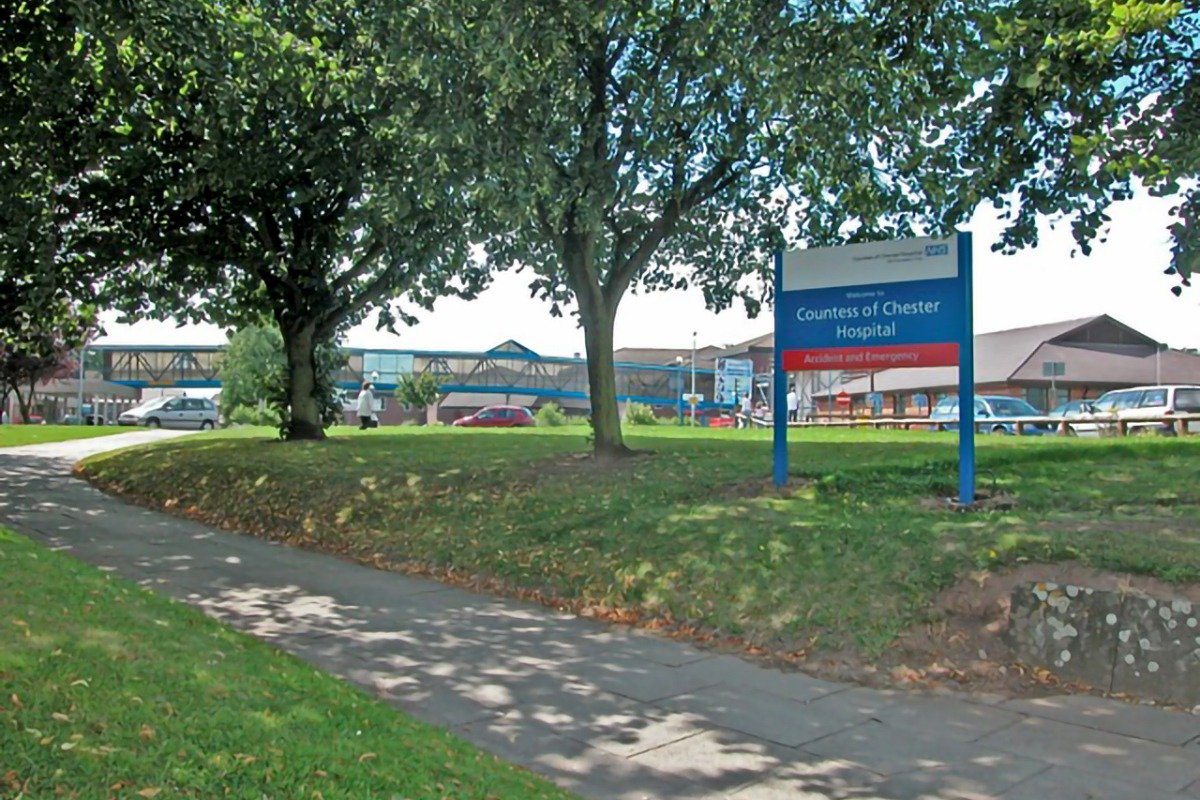
The government has ordered an inquiry into the murder of seven babies and attempted murder of six on the neo-natal unit at the Countess of Chester Hospital in Manchester following Lucy Letby’s murder conviction on 18 July. In the shadow cast by this harrowing case, it is vital that we explore why problems identified over 35 five years ago, following the Cleveland inquiry, are still impacting safeguarding decisions today.
The Cleveland inquiry
In 1988, Lord Justice Butler-Sloss completed her report on agency responses to the alleged sexual abuse of children in Cleveland over the preceding year. It was the first major public inquiry into inter-agency work in respect of child protection. Its findings resonate strongly with the Letby case today.
In Cleveland, the number of children identified by health services as having been sexually abused had risen exponentially in 1987, from two dozen in a normal year to over a hundred. Children had been removed from their homes, often for months at a time and agencies had been unable to cope with the subsequent work leading to a breakdown in inter-agency relationships.
Many of the initial sexual abuse diagnoses had been made using a comparatively new technique known as ‘reflex anal dilation’. This was credible in paediatric medical circles and was subsequently widely used and accepted by courts as part of a range of diagnostic tools but was contested at the time by the police surgeon as an indicator of abuse. At that time, normal practice when child abuse was suspected, was to prevent a child being returned to their abuser. In a great majority of the cases, the abuser was not (at least initially) known and so children were unable to return to their parents’ home and many remained in hospital and were later fostered.
The local MP, Stuart Bell, the police, the police surgeon and the local press took the side of the families and waged a public campaign against the doctor who made the diagnoses, Marietta Higgs, and Sue Richardson, the social work child protection consultant responsible for the decisions to place the children away from their homes while enquiries were ongoing.
The Cleveland inquiry did not consider whether the children had been abused or not (and therefore who was right or wrong) but how agencies and professionals behaved throughout the process and the impact this had on professional practice, the children, and their families.
The Letby inquiry will be different in that it is starting from a position where the doctors have been proved ‘right’ in their concerns about Letby (subject to any appeal). In addition, an inquiry today would not consider the ability of other parts of the system to cope as a legitimate reason not to pursue protective action or report a crime.
Inter-disciplinary working
Butler-Sloss concluded, “The reasons for the crisis are complex. In essence they included:
- Lack of proper understanding by the main agencies of each other’s functions in relation to child sexual abuse;
- a lack of communication between the agencies;
- differences of views at middle-management level which were not recognised by senior staff. These eventually affected those working on the ground.”
The report was critical of Higgs (and her junior colleague Geoffrey Wyatt) for the “over-confidence with which they pursued the detection of sexual abuse”. The report also noted that “the certainty of their findings in relation to children diagnosed by them without prior complaint, posed particular problems for the Police and Social Services”. Higgs, although later established to be correct in her diagnoses of the children having been abused, had “failed to take account of the likely consequences of diagnosing so many cases in such a short space of time and failing to consider that she might be wrong”.
While many people still believe that Higgs and Richardson were the professionals found to be most at fault, the inquiry’s severest criticisms were reserved for local MP, the police and the police surgeon who was “out of his depth” (and who, by the time of the inquiry, accepted that his understanding of anal dilatation was insufficient to justify his hostile and overly emotional response to Higgs or advice to the police) and Dr Raine Roberts who had advised him to resist any diagnosis based on the technique. Roberts insisted that the anal dilation technique’s efficacy as a diagnostic tool was unevidenced and that Higgs was wrong in all her diagnoses. Her views were found by the inquiry to be “extremely and unnecessarily critical and contentious … more and more passionate in character and thus of less value”.
Butler-Sloss was also highly critical of the police for accepting Robert’s diagnoses and views uncritically, as this led to poor investigations (and latterly no investigations) and a withdrawal from cooperation with other agencies. Middle and senior managers of all organisations were criticised for not managing the difficulties and letting the inter-disciplinary tensions continue without resolution or an inter-agency plan.
Stuart Bell, the MP, was considered to have inflamed the situation with his comments to the press describing sexual abuse investigations as “an attack on family life” and those undertaking them as “empire building” and “looking for child fodder”. Not only were they unhelpful in managing the situation, but they were also wrong and misleading.
The inquiry team found that the professionals involved acted in good faith even if their judgements were found to be flawed. There was no evidence of deliberate malpractice, harm, cover-ups, or incompetence. However, the inquiry also found that when new information emerged, some participants, the police surgeon and the MP were noted, were unable to back-track or rectify some of the damage their erroneous views had incurred.
Child protection guidance and procedures
Then, as now, the child safeguarding guidance is absolutely and unequivocally clear – that cases of suspected child abuse should be referred to safeguarding services (police or social work) immediately. Since 2006, when the role was introduced, a referral should also be made to the local authority designated officer when a member of staff is suspected of causing harm so that guidance can be obtained.
At the Countess of Chester Hospital, the reasons for failure to follow the procedures are not yet clear. But just as the police in Cleveland screened out the allegations of child abuse as medical error, managers and/or professionals at the Countess of Chester Hospital screened out a referral to child protection agencies, at least initially.
We are told that the doctors considered that a crime must have been committed but it is not clear why they did not report this immediately to the police and we have yet to hear managers’ understanding of the allegations referred to them. Given that, even after a ten-month trial, the evidence for Letby’s guilt is largely circumstantial – no one had ever seen her harm a child, and her involvement was specifically excluded from most cases of neo-natal deaths there – it may be that management considered the case something other than a child protection matter – a mistake, or a disciplinary, grievance, poor practice matter for example.
Criminologists and specialist child protection teams understand a great deal about how our underlying assumptions about what criminality looks like – and our difficulty in comprehending that a colleague on whom we rely absolutely – could be a cause of harm; hence the requirement to refer immediately if there is any suspicion. In most cases, even an initial suspicion takes a long time to emerge, meaning that much time is already lost.
Trial by media
As occurred in Cleveland, some professionals in the Letby case are already speaking to the press, advancing their ‘side’ of the story (and who can blame them?). They are supported by other loud voices within health, the press, and by politicians. The public’s desire for ‘heroes and villains’ to be clearly delineated, and rewarded or punished accordingly, is part of the problem in learning from safeguarding failures. The minds of those involved in the case quickly set into a defensive posture and people are unable to recognise their own errors.

Impact on children
When professionals feel they are not being listened to or their concerns are not being addressed in the way they hope, they give up (the greatest risk to a child) or they develop new strategies for dealing with the problem. If these new strategies are outside expected procedures or norms (for example complaining elsewhere or whistle-blowing), or accompanied by heavy or personal criticism of those ‘not listening’, the concerned professional risks becoming the ‘problem’ to be managed rather than a child’s safety.
In Cleveland the ‘problem’ became Higgs and Richardson who were disbelieved, and their concerns dismissed as coming from a narrow standpoint or position. The early indications emerging from the Letby case are that there was a similar ideological divide (this time between doctors and managers) and this mindset – on both sides – may have inhibited an earlier resolution to the problem. Institutional and professional bickering may have got in the way of seeing the babies’ needs and addressing the risks that they faced (including the (still) unexplained deaths of other children, not harmed by Letby).
In Cleveland, a whole generation of workers from all agencies had to move on or retire before there was a recovery from the crisis. In this decade and a half, many children were poorly served because of institutional fear and paralysis. At the time of the crisis, the consequences of the Cleveland failures were thought to be the separation of children from innocent loving families. Later, it transpired that many of the children had been returned home to further abuse (child protection proceedings were abandoned in 1987 but many more concerns emerged later).
Failing to learn from Cleveland
The Cleveland inquiry was a thorough and comprehensive document which still provides considerable learning. However, it did not ‘set the record straight’ for the public or professionals. At 320 foolscap pages of very small print and at a cost of £14.50 (35 years ago!) the readership was tiny. Most people – the public, managers, professionals, and policy makers – relied on summaries and the recommendations provided either by professional organisations or the press, whose views and judgements were already firmly established prior to publication and who looked only for the evidence that supported their predetermined and pre-published views. The learning was often missed.
Protecting children is complex and contested. The main lesson from the Cleveland inquiry is not who was right or wrong but that when different professional groups cannot manage dissent and genuine disagreements, it is the vulnerable who fall through the protective net. It is often in disagreements that misunderstandings about the meaning of the evidence and its strength, and professional responsibilities and assumptions, are revealed.
The inquiry into the Letby case is necessary for the families of the babies who died, but what is needed for future families and babies is a better understanding of what needs to be done to create the organisational and professional conditions within which dissent can be a tool for reflection and analysis, not a battle to be won.



