




As we approach the third anniversary of the signing of the EU withdrawal agreement, the troublesome Northern Ireland protocol is forcing its way back up the political agenda and matters are once again coming to a head.
Technical talks between the UK and EU are set to begin in an effort to restore devolved government to Northern Ireland and resolve the Irish trilemma. In other words, how do you deliver Brexit without a hard border on the island of Ireland or a sea border down the Irish Sea?
Under Boris Johnson, the British government had threatened to override the protocol unless the EU accepted the need to completely renegotiate it, and it has still not been implemented in full. Democratic Unionist Party (DUP) members have refused to take their place in the Stormont executive, fearing the agreement threatens their position in the United Kingdom.
A new spirit of cooperation
Last week a meeting of the British-Irish Intergovernmental Conference took place in London and appears to have marked a significant change of tone by the Truss administration. A fresh impetus is beginning to develop amid a newfound spirit of cooperation not seen under Lord Frost’s deliberately antagonistic approach.
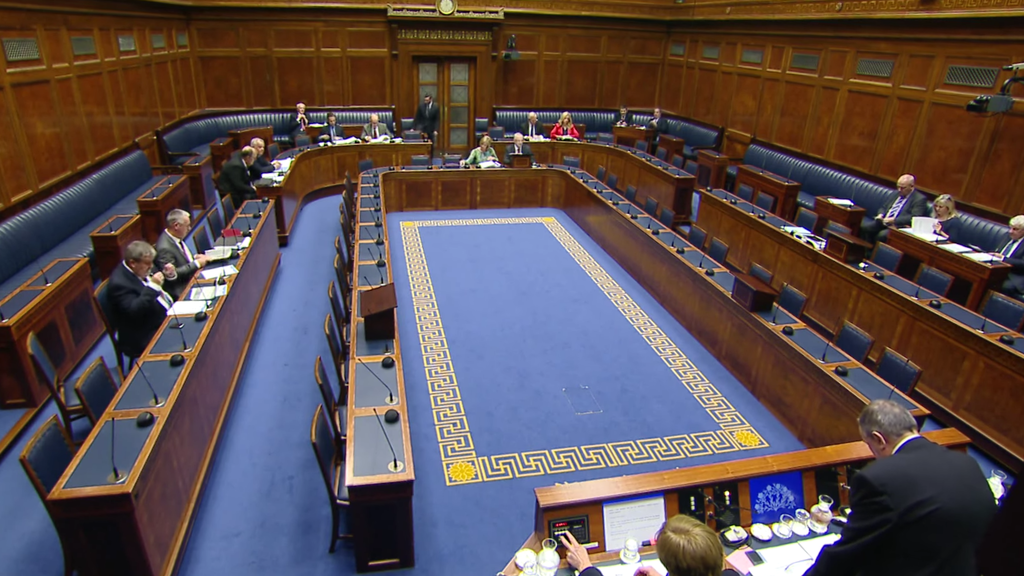
Northern Ireland secretary, Chris Heaton-Harris, signaled that he will call fresh elections to the Stormont assembly on 28 October (as required by law) unless the DUP agrees to join the power-sharing executive, something they have steadfastly refused to do since the last election in May when Sinn Féin was returned as the largest party.
It follows Heaton-Harris telling journalists in September, after meeting parties in Belfast, that he could see a “landing zone” to resolve the problems around the protocol which would see the executive restored:
“I think there is a very positive place we can get to – a landing zone which would mean the executive could reform and I want to aim for that … Judge me on my actions and my words in this area and it won’t be long as this needs to move forward very quickly.”
The DUP is not a party to the current talks.
Northern Ireland protocol bill to be delayed
Meanwhile, it seems the controversial legislation to overturn the protocol – the Northern Ireland protocol bill, which has now reached the Lords – will be delayed for six months using an amendment tabled by the former Tory MP Lord Cormack and apparently supported by a majority of peers. The government has not officially commented on the move.
However, Lord Dodds, the DUP leader in the Lords, called it a “completely wrong-headed approach” that risked prolonging the political chaos in Belfast. “The bill needs to be proceeding to demonstrate the government is serious about legislation if negotiations don’t come to anything”, he told The Telegraph. “Once you lift the pressure off and the EU sees there’s once again this undermining of the government’s negotiation stance, that simply doesn’t help.”
And in what has all the hallmarks of a choreographed move, in the last few days the former Irish taoiseach Leo Varadkar has said that the original protocol that he negotiated is “a little too strict”, hinting that the EU may be about to offer a compromise.

The DUP’s seven tests for any new agreement
But in an indication of just how difficult it will be to unravel the Gordian knot created by Brexit, DUP leader Sir Jeffrey Donaldson, in a speech to delegates at his party conference last Saturday, said the protocol issue could not be addressed simply by reducing the number of checks on goods entering Northern Ireland from Britain.
Donaldson said:
“The checks on the Irish Sea border are the symptom of the underlying problem namely that Northern Ireland is subject to a different set of laws imposed upon us by a foreign entity without any say or vote by any elected representative of the people of Northern Ireland.
“For the benefit of those watching in London and Brussels, let me restate our clear commitment. If decisive action is taken on the Protocol that restores our place fully within the UK this party will take its place once again in a fully functioning Executive.”
The DUP has demanded that any new arrangements must meet the seven ‘tests’ the party set out in July 2021:

Senior DUP figures have told Politico they would rather see a ‘funeral’ for Belfast power-sharing than accept the Northern Ireland protocol. They doubt that the British government will call new assembly elections but expect to regain political ground lost to Sinn Féin in May if they do.
The next two weeks may be crucial if we are to see a resolution to the long-running dispute that all parties can sign up to.


