
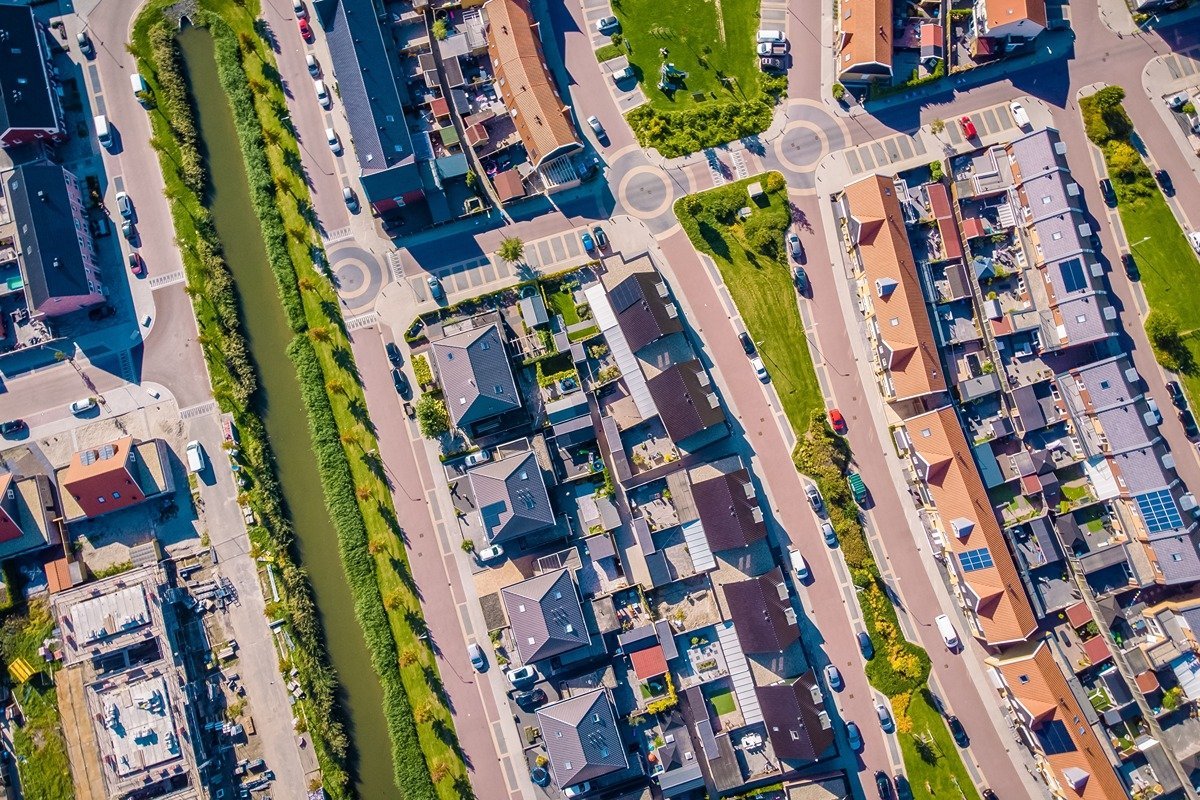
The UK is not alone in having too few dwellings to meet demand. In some European countries, a lack of affordable dwellings means people have to live with their parents into their 30s and beyond. And those homes rarely fit the needs of multi-generational living.
While two- or even three-generational housing may exist in some rural areas, it is rare in urban areas and the suburbs. Multi-generational housing may have many benefits and could help to manage the social care of young children, the infirm and the elderly. It isn’t a high priority though for governments and construction companies bent on using the quick fix metric of how many homes were built. They use this to claim policy ‘success’ rather than focusing on how best to meet families’ housing needs in ways that are genuinely environmentally friendly, family friendly and sustainable.
Who among us wouldn’t want to have a quality, safe place to call our own, with access to clean air, public services, transport and a fair bit of open space? Yet, even in God’s own country – Yorkshire – tightly packed new housing developments, peppered with ‘affordable housing’, pop up on strips of land between motorways and main thoroughfares. Just take a drive along the A19 and A64.
Housing policy ping pong
Blaming housing shortages on Margaret Thatcher nudges us to recognise that the UK’s housing market has been driven by seeing housing not as homes, but as investable assets. Other countries have focused more on the idea of a dwelling as a home above any other consideration.
However, inflation affects house prices and rents everywhere. So much so that the EU Commission has looked at how its funding to support regional development might be used more flexibly to address poverty and social needs in a policy area that traditionally has been left to the sole discretion of its member states.
Housing is now on the EU’s agenda, the European Parliament has formed a special committee on the housing crisis. The EU Commission’s recently announced multi-annual financial framework plan runs from 2028 to 2034 – with a budget of €2tn. The Commission has earmarked some 14% of it for high priority social infrastructure and social needs – poverty, access to housing and energy-efficient homes – and aims to build on its other instruments to boost mobility within EU states and across their borders, such as Erasmus+. Lack of housing stops people from moving for employment, which in turn can compromise EU competitiveness.
So, the EU Commission is trying to take a more holistic, cross-departmental approach to using EU funds to focus on common problems in linked policy sectors.
What happens next is up to national governments and their regional counterparts. As in the UK, this is when housing may become a political football kicked around by parties vying for votes. This is less likely in countries where coalition governments and stronger local governments, as in France, tend to have to agree on some common goals and stick to them for the sake of their communities. But here in the UK, party politics mean big time politicking over housing and cutting back on ‘red tape’ (that is, regulatory quality standards). That can’t go on.

Airbnb v residents
The market for Airbnb has detrimentally impacted access to affordable homes across the EU, not just in the most desirable tourist areas. Plans to tackle short term rentals have not been sufficient to keep pace with the demand for affordable housing for residents. City leaders are increasingly concerned that the negative impacts will compromise their ability to maintain city services and manage the cities themselves.
So the EU Commission launched a public consultation on the revised Service of General Economic Interest (SCEI) decision, open until 4 November. The purpose is to allow governments to support social housing without breaking competition and state aid rules. The aim is to boost the supply of housing for disadvantaged, poorer and socially excluded groups, prevent market distortion, and ensure flexibility to accommodate local needs.
It draws on the experience of the Netherlands, with its robust social housing policy, where non-profit housing associations (for example in Utrecht) have, since 1995, managed around 75% of the country’s rental housing, with varying degrees of consistency and some (now curtailed) speculative investment that negatively impacted access for all to affordable housing in urban areas.
Sound familiar?
The EU Commission’s affordable housing plan is due to appear in early 2026. It places a high priority on healthy urban living, and the provision of sufficient public spaces and amenities. Utrecht wants to see the EU create dedicated funding for housing that integrates social, environmental and urban planning, possibly by using European Investment Bank loans offered at very low interest rates.
Crucially, there is an interest in setting housing standards across the EU to deter the adoption of lower environmental standards that would allow builders to build more homes, but of lower quality with compromised living conditions.
In short, more homes must not mean shoddier ones, even when rents and prices have priced young people out of the market. Utrecht is pushing for sustainable developments that pay attention to amenities and affordability, green space, green roofs, energy efficiency, sustainable materials and access to public transport to cut car dependency.
It has also advocated house sharing and upgrading older buildings to make that possible, and having those schemes run by housing associations, which has previously been common practice in the Netherlands.
Another idea is to give middle income buyers a discount on leaseholds, based on their income and assets, but tie any re-sale going to the same target group of middle-income earners.
Can the UK be more Dutch?
Could the UK learn from such programmes? Could parties constantly pitching their housing ‘manifestos’, which carry little credibility among an increasingly disenchanted electorate, learn from France and others in Europe?
They could insist on good living conditions and climate-friendly, sustainable, affordable housing being the norm. The question is: do they have the imagination to do so, and the political will to try and engage with the EU Commission’s drive for good-quality, affordable housing? Can they give their heads a wobble and be more Dutch?