





See previous letters to the editor. If you would like to contact Yorkshire Bylines, email editor@yorkshirebylines.co.uk
Protect your hearing this summer
6 June 2023
Dear editor,
Summer is well and truly on its way, which means more opportunities to be outside with friends and family and listen to live music.
In all of the fun, we sometimes forget to look after our hearing health and how loud sounds are. A live concert or festival can often reach levels of 110 decibels. Repeated or long exposure to sounds at 85 decibels or above can cause hearing loss so it is important that whilst you are sipping that overpriced beer and singing along to your favourite artist you take care of your ears.
The good news is that there are some easy ways you can still enjoy yourself and keep your hearing protected: Carry earplugs with you and use them, the reusable kind designed for clubbers and musicians don’t muffle sound, just make it a bit quieter and can protect your ears. Stay away from the speakers – the closer you are, the greater the risk of hearing damage. And take regular breaks from the loudest areas to give your ears a rest. We want everyone to have a great summer – and at the same time keep your hearing healthy for the future.
It is important to check your hearing regularly so join over 250,000 people and take the free, online hearing check by visiting rnid.org.uk.
Crystal Rolfe
Associate Director for Health at RNID

Progressives divisions and the culture war
26 May 2023
Dear editor,
In his book Bullingdon Club Britain, Sam Bright comments:
“Although there is a small group of hyper liberals who are attempting to rapidly and combatively erode ‘traditional’ ideas regarding borders, the family nucleus and gender identity – on occasion shutting down those who disagree – there is a much wider liberal consensus in Britain that is not so forthright nor so antagonistic…
“In an effort to turn moderate conservatives against this body of sane liberal opinion however right wing culture warriors exaggerate the influence of hyper-liberals –portraying the latter as the dominant progressive faction.”
Sam is right that the culture warriors are trying to split the liberal – or rather progressive – movement, but the front is being split internally. If the Stalin era is any guide, those who try to maintain a united front are at risk from aggressive factionalists. George Orwell’s warnings in the book Homage to Catalonia were based on his experience of going to fight Spanish fascists but finding he was battling Communist domination. Control trumped the anti-fascist battle against Franco and the fascists won the war.
We are a long way from Barcelona street fighting, but it is vital to recognise that control freaks play into the hands of the right by attempting to get total control.
Yours faithfully,
Trevor Fisher
Stafford
Yet more empty promises and easy soundbites
19 May 2023
Dear editor,
Suella Braverman may not have co-edited the 2012 right wing ideological book Britannia Unchained as Liz Truss, Dominic Raab, Kwasi Kwarteng, Priti Patel and Chris Skidmore did, but I’m sure she would agree with the infamous statement in the book that “Once they enter the workplace, the British are among the worst idlers in the world ”. In her recent conference address, Braverman declared that we should no longer rely on cheap immigrant labour, but rather train our own butchers, fruit and veg pickers etc. But how to entice these idlers to bend their backs in the field. If we had mass unemployment then even idlers would be desperate for a job. So the other alternative is to make it highly lucrative to pick fruit, but I cannot see that happening.
No wonder people become cynical about the easy soundbites that we have heard from politicians in the last 13 years. David Cameron promised to bring immigration down to the tens of thousands, the Brexiteers promised to spend the £350 million per week sent to the EU on the NHS, and Boris Johnson promised to build 40 new hospitals.
Yours faithfully,
Justin Enthoven
Harrogate
Volunteers needed to support people with hearing loss
18 May 2023
Dear editor,
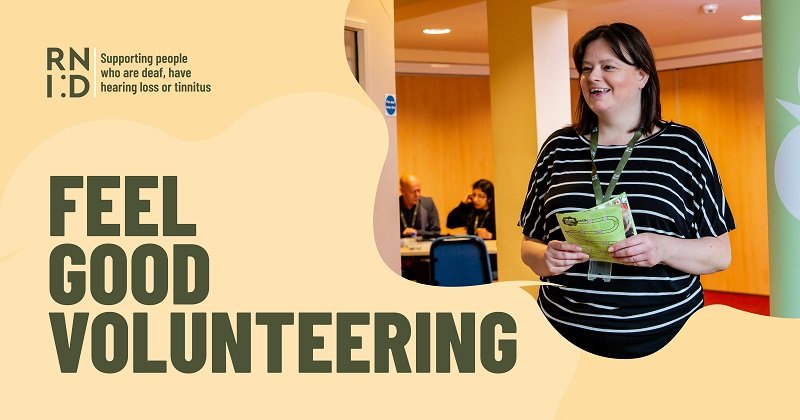
RNID, the charity supporting people who are deaf, have hearing loss or tinnitus is looking for volunteers to support our vital work across the UK.
Volunteers Week (1-7 June) is a fantastic opportunity to celebrate the amazing impact our volunteers have. Last year, they gave more than 7,740 hours of their time to support people in their communities with practical information and support with hearing aids. This year, we need you to help us reach our goals and ensure that everyone in the UK can benefit from support.
Volunteering for RNID could involve providing information to local organisations and community groups, helping people get the most out of their hearing aids, or giving a friendly welcome to everyone who passes through the door at one of our support sessions.
Many of our volunteers have hearing loss themselves or in their family, and volunteering with us is a great way to meet new people, gain new skills and experience, try something new and help people in your community.
What are you waiting for? For more information, visit www.rnid.org.uk/volunteering or contact us at 0808 808 0123. You can also text us at 07360 268 988.
Yours faithfully,
Jackie White,
Director at RNID
A glorious opportunity?
11 May 2023
Dear editor,
Last week’s local election results indicate that Labour might be the largest party after next general election, but Labour might not have a majority. If the latter, Sir Keir Starmer would then have to choose between putting a coalition together with other parties, or running a minority administration, with the Liberal Democrats and others supporting on a ‘confidence and supply’ basis.
Starmer would be well advised to drop the ‘no coalition’ rhetoric.
Operating on a confidence and supply basis, as a government without a majority, would allow scope for only modest, tinkering reform. For 13 years Conservative governments have trashed this country, leaving behind a huge task of reconstruction. Labour in 2024 will find itself confronted with tasks almost as great as the Labour government of 1945 that had a healthy majority.
Politics in this country is plagued by party tribalism together with hubris on the part of some party leaders. I am probably hopelessly optimistic, but could our non-Conservative politicians see the UK’s present predicament as an opportunity to work together in the national interest?
A coalition government, led by Labour and including Liberal Democrats and both Scottish and Welsh national parties would have scope to draw on this rich source of ideas and enthusiasm. I would urge that Caroline Lucas get a seat in cabinet, in part to keep the rest round the table honest. In some ways UK’s weak condition provides a glorious opportunity to start putting things right.
This coalition government could focus on addressing climate change far more urgently than the Tories have done for years. Minor parties in the coalition would be far more ambitious than Labour in moving the UK much closer to the EU. Ideally, within a few years, Great Britain might rejoin Northern Ireland, back in the single market and customs union.
We need a radical change in the electoral system, ending ‘first past the post’ and moving to the single transferable vote in multi-member constituencies. In 2019 Boris Johnson won an 80-seat majority on a 43.5% share of the vote. That must never be allowed to happen again.
As the late (and much loved) MP Jo Cox said in her maiden speech:
“We are far more united and have far more in common than that which divides us”.
If Labour fails to win an outright majority Starmer should remember those words, be bold, and set about coalition building.
Yours faithfully,
John Cole
Shipley
Pre-Brexit, the UK was a magnet for brilliant musicians to perform and study here
20 April 2023
Dear editor,
I was deeply concerned to read recently about the Ukrainian state Khmelnitsky Orchestra’s tour of the UK being badly disrupted by the refusal to supply visas to several members, including the conductor, in time for the first concert in Portsmouth. Two days after the tour was due to begin, these musicians, stuck in Paris, were told by the British Embassy that they needed to pay 15,000 euros if they wanted 24 hour ‘express’ visas.
The visas were eventually issued but only when the promoter, Star Entertainment, asked the embassy for an explanation to put in a press release to inform the media. The concerts at the Salford Lowry and York Barbican have had to be postponed. The Portsmouth concert went ahead but with UK-based musicians hurriedly drafted in to replace the musicians stranded in Paris, and having to sight-read their music.
The irony is that the orchestra was playing music from the Harry Potter and Lord of the Rings films which it had previously performed in Belgium when it was hailed by the deputy British ambassador, Chloe Louter, as “an incredible honour to have such an iconic part of British culture being performed by a Ukrainian orchestra”. The show had even been promoted on the government website as an example of British-Ukrainian relations. The hypocrisy is staggering.
There was a time when this country, with its marvellous music colleges and orchestral venues, was a magnet for brilliant musicians from abroad to study or perform in a cultured and welcoming environment. The realities of this post-Brexit world are now truly coming to light. No wonder Sir Simon Rattle has chosen to move back to the culturally supportive European Union.
With best wishes,
Justin Enthoven
Harrogate
11 April 2023
To the headteacher who wrote about their school’s ‘bullying’ Ofsted inspection
Many thanks for sharing your somewhat traumatic Ofsted experience. As you may have gathered by now, it is an experience shared by many schools, if the response to Ruth Perry’s story is anything to go by.
This is not a new story. Complaints about Ofsted go back, almost to its introduction. The earliest incident I can recall was reported in the TES, 14 April 2000, when the death of Pam Relf was linked to an Ofsted inspection.
The suspicions of your leadership team that Ofsted had pre-judged you have been borne out by others like the education professor who emailed me wondering that, maybe, “things aren’t equal, and they [Ofsted] are going into small local authority primary schools digging around for something they can label an administrative safeguarding failure”.
Ruth Perry herself was told on the first day of the two-day inspection that they were going to judge the school to be ‘inadequate’. Highly unprofessional to say the least. If teachers behaved towards their students in the same way as Ofsted behaved towards teachers, they would be hauled before a tribunal, sacked or both. Bullying of any kind has no place in education.
From your article, the mismatch between the face-to-face feedback and the written feedback at your school was hypocritical and unprofessional. Safeguarding is very important in this day and dangerous age – but it is something that teachers simply regard as their daily duty.
I wrote an article for West England Bylines using the Caversham Ofsted report itself as source material and commenting on the lack of empathy shown by these inspectors. I quoted four of their ‘guiding principles’, which basically say their job is to “encourage, support and treat the situation with sensitivity”. They seem to find it difficult to put the theory into practice.
There are also rumours that Ofsted may take over teacher training. Can you imagine their approach? It doesn’t bear thinking about.
Since the 1988 introduction of the National Curriculum, then SATs, league tables, etc, we have become ‘numbed’ into being told what to do without consultation from politicians who, by sheer lack of experience and, some might say, by their bias towards private education, know little about what actually goes on in a primary school.
It seems to me, and probably every other teacher who reads your story, that what is important here is how your school is actually run, how contented the children are ‘learning how to do something today that they didn’t know yesterday’ – to paraphrase Mary Warnock, the author of the 1981 Warnock Report on Special Needs.
Only you will know where your future lies. But please don’t let an organisation like Ofsted cause you to lose faith in yourself or your professional confidence.
Do you think, perhaps, it may help to remember what you have achieved so far and what more there is to be done for the children in your care? I would like to suggest that as far as your school is concerned, you are too valuable to lose.
Surely that is more important and relevant than a one-word ill-informed label so casually dropped into your lap by Ofsted – an organisation which has been constantly criticised for its ‘unhelpful’ approach to school appraisal.
Kind regards,
Michael Todd
(Email address supplied)
April Fool nonsense!
1 April 2023
Dear editor,
As a new subscriber to the Bylines Gazette I am writing to express my appreciation at the restraint you demonstrated today in not indulging in infantile and badly written April Fool spoofs like so much of the mainstream press. It is such a relief to know I can scroll through the content of the Gazette and other Bylines stories without having to worry if it is satire. Thank you.
Yours faithfully,
Sue Perbly-Dunne (Mrs)
Silence or protest?
13 March 2023
“Staying Silent When We Should Protest
Makes Cowards Of Us All”
Ella Wheeler Wilcox, 1850-1919
Dear editor,
Sometimes impartiality becomes ‘sitting on the fence’ – an excuse to do nothing. But Gary Lineker ‘did something’. His heartfelt gut response to Suella Braverman’s justification for her less-than-compassionate approach to the human refugee disaster, should be applauded from the roof tops. It was a sympathetic and compassionate reaction to the distress of a group of very vulnerable people.
His comments weren’t anti-government bias, they weren’t ‘sticking his nose in where he shouldn’t’. It was someone with a conscience speaking up for people who have no voice and who face a mean spirited immigration policy. It was ‘doing the right thing’ – as opposed to ‘the wrong thing’.
This is to do with ethics, morals, without which life would be unbearable. This is about knowing right from wrong. This is about knowing that dishonesty is wrong – cruelty is wrong – bullying is wrong.
My experience is that kindness, courtesy, consideration, and toleration are pretty common. They help people get along with each other and we feel better as a result. For us, they are the ‘right thing to do’.
Most people that I talk to, not only know the difference between right and wrong but, are generally kind to each other, considerate; they help each other out where they can. For me, this is what it is to be human.
It’s not political bias to confront and oppose cruelty and oppression. It’s just the right thing to do.
Yours faithfully,
Michael Todd
I can no longer support a party that doesn’t believe in parliamentary democracy
7 March 2023
Dear editor,
At the referendum I voted to remain in Europe – I’m old enough to have voted to join and, until the last election, was a classic Conservative voter.
I was out of the country until a couple of days before the referendum voting day and so had to rely on others as to how many serious topics were discussed, Northern Ireland, Gibraltar, etc. as opposed to name calling.
However it occurred to me that the whole process was the equivalent of giving a two-fingered ‘salute’ to all the democratically elected members of parliament, and indeed to the whole concept of parliamentary democracy as opposed to presidential democracy.
In a parliamentary democracy we elect MPs to represent us and expect them to do just that, even if we didn’t vote for them. We probably cast our votes also knowing that if ‘our’ candidate’s party wins more seats in the houses of parliament, it will be that party that will form the government and hence the team, led by the prime minister, that governs us.
In a presidential democracy we would be electing a president to govern our country, and in the process putting a lot of power into the hands of one person.
I believe in a parliamentary democracy being inherently better than a presidential democracy and therefore can no longer vote for a party that doesn’t believe in it. It is quite possible that this disbelief is at the heart of the shenanigans that have gone on in the Conservative Party for the last ten years or more.
Just like a general election, I have no problem in voting on a single issue on the same day, but that the vote is to tell our already elected political representative, ‘our’ MP, how they should vote when they represent us in the House of Commons.
This means any poll on to where current attitude is to Brexit should be based on constituencies, not a presidential approach. It would mean that MPs would have to explain to their constituencies the pros and cons of Brexit, but much more importantly abide by the vote of their constituents.
(I’ve been told that such an approach would have given Theresa May a 30-seat majority in the House of Commons, which would have enabled her to govern rather than be constantly looking over her shoulder at who was going to support her etc.)
It would though have changed the entire nature of the debate as all MPs would have had to get off their backs and out into the streets and their constituents (and probably reduced the influence of Putin on the result).
Kind regards
Richard Moseley
(born under a White Rose, Sheffield)
Who will protect our rivers from sewage?
3 March 2023
Dear editor,
Thirsk and Malton voters who care about our environment will soon have an important and far-reaching decision to make; one which will have a major impact on the UK’s direction of travel in tackling the multiple threats to our environment. Our representative in parliament recently voted there to block a proposal to place a legal duty on water companies in England and Wales “to make improvements to their sewerage systems and demonstrate progressive reductions in the harm caused by discharges of untreated sewage”.
This might be understandable, although not excusable, if Mr Hollinrake was able to take the parochial view that sewage pollution is not a problem in his constituency. However that is very far from the case. Government statistics published by The Rivers Trust show that his Thirsk and Malton constituency is one of the very worst in Yorkshire for dumping of raw sewage in waterways.
In 2021 there were 4,773 overflow incidents in his constituency lasting for a combined duration of 33,353 hours. That’s an average 13 spills a day; a virtually continual high-volume flow of raw sewage into the waterways. Of the 46 constituencies in Yorkshire only two were worse than Thirsk and Malton. Many areas kept pollution levels down to a fraction of those occurring in Thirsk and Malton.
This suggests that where there is a political will, things can be done. The level of sewage pollution across the country is a scandal in itself but equally scandalous is the government instructing its members of parliament to allow water companies to keep doing it.
When it comes to the general election, people who care about the environment will need to consider this. Will someone who is unable to stand up to his party bosses to protect the rivers in his own constituency be capable of playing a useful role in combatting the colossal challenges that the environment faces globally? Will a government that puts the interests of water companies and their overpaid directors ahead of healthy rivers be able to take effective action on the wider issues of global warming, pollution and loss of biodiversity?
Yours faithfully,
Mick Johnston
Ryedale
So much for Brexit sovereignty
25 January 2023
Dear editor,
I very much like and appreciate your article ‘So much for Brexit sovereignty‘. Brexit was, and still is, based on emotions and misinformation rather than facts. Sovereignty is only a concept, especially if it is linked to power and influence in a ‘do what you want’ attitude. The King is the best example: he IS the Sovereign, but he HAS NO sovereignty. He is not even allowed to say what he thinks. Instead, the top politicians have the power.
It seems that in recent years the chances of politicians to get one of the top jobs is based on their level of incompetence – the higher this level, the better the chances. Politicians are regularly rated based on their popularity. But popularity is quite often inversely proportional to their competence, which means that is proportional to their incompetence (which is called the Boris Factor).
I guess it would be helpful for the voters if, like the ranking for their popularity, the politicians would also officially be ranked for their incompetence. They could be ranked, say, on a scale of 32 to 212 Mogg (*), where 212 is the highest achievable level of incompetence.
In addition to the general level of incompetence there could also be rankings in more specific areas. This might be helpful for finding ministers with the best qualifications for their job. The politician with the highest incompetence score in financial matters, for example, would be the ideal candidate for the post of chancellor, etc. Such a ranking might avoid that, by accident or mistake, a competent politician would become a minister.
Of course incompetence is not the only required qualification for top politicians. Important are also the ability of lying without blushing, the loyalty to the PM, and the ability to work as a team (as Charlie Croker said in The Italian Job: It’s a very difficult job and the only way to get through it is we all work together as a team. And that means you do everything I say).
Yours faithfully,
Helmuth Porschen
(*) A rating between, for example, 0 and 100 would be un-British, because this is a metric and not an imperial scale. Therefore the Fahrenheit equivalents to the Celsius scale are suggested. And it is suggested that the measurement unit for incompetence is named after the Hon. JRM, who, as minister of state for Brexit, has achieved the highest level of incompetence, because he had to ask the readers of several papers what he should do in his job.
Child poverty and public sector pay
23 January 2023
Dear editor,
The Conservative government has claimed that funding the NHS nurses’ and other public sector workers’ pay claims would cost each UK household £1,000 a year. They say that that is unaffordable. At the same time, the End Child Poverty charity reports that 26% of children in Ryedale and 20% of children in Hambleton are living in poverty and that the estimated cost of extending free school meals to more needy children is £555–790m a year. The question is: is paying for either or both affordable or not?
Richard Murphy, Professor of Accounting at Sheffield University Management School, and director of Tax Research LLP, has pointed out that the government could easily save £27bn a year by stopping payment of interest on the funds gifted to commercial banks after the global banking crash in 2007 (quantitative easing, or QE). It’s in their power to do so but they have chosen not to.
Secondly, both the Truss and the Sunak administrations chose to reduce the bank tax surcharge from 8% to 3% – a change that may save banks up to £7bn – and to abolish the cap on bankers’ bonuses. All these actions serve to increase the banks’ already massive profits at public expense and, no doubt, to increase bankers’ bonuses on those profits. It seems that the government prefers paying bankers to paying nurses.
We hear Conservative ministers claim that “If everyone in the public sector had a pay rise in line with inflation, it would cost an extra £28 billion”. That is less than the money that the government is gifting to banks. It’s a question of choices, isn’t it?
And of course, up to 40% of the money paid to public sector workers will come back to the government in tax and NI, and most of the people who provide our medical care; teach our young people; empty our bins; put out fires; maintain the roads; operate our pools and leisure centres; look after the trees and green spaces; will all be spending money in our local communities. How many bankers will be spending their bonuses in the shops of our market towns and villages?
It is clear that the government is choosing not to support working people and children. In that case, our local Conservative MPs might reflect that they cannot expect the support of working people at the next election.
Yours faithfully,
Mark White
York
Support for rail workers – striking is the last resort
6 January 2023
Dear editor,
We are all aware that rail workers began their first 48-hour strike at the start of the new year, with criticism from ministers and rail bosses for the action that has left only a fifth of services across the country running. Transport Secretary Mark Harper has demanded that the Rail, Maritime and Transport union (RMT) get “off the picket line and round the negotiating table”.
As someone who is involved in these kinds of challenging negotiations in my trade union role, it is only right that I highlight that it is not only the unions that create the barriers – the other side of the table can too.
The RMT say that they had been available and eager to negotiate throughout the Christmas period, but the rail employers have not arranged any formal negotiations with the union to resolve the dispute.
It may seem that the government has waited until the strikes take place to make statements, but if it had wanted to get a settlement and get the strikes off, it could have taken a bit more action and got things moving before now.
Contracts between rail operators and the government allow the government to direct how disputes are handled. Rail operators are not free to agree terms and conditions with their employees without the involvement of the transport secretary. Harper, so far, has not taken the necessary steps to start this process.
It is interesting that in every part of the rail network where the Department for Transport is not involved, the RMT have agreed deals. For example:
- Eurostar – Mitie security: 10% (29% for lowest paid)
- Scotrail: 7–9%
- Transport for Wales: 6.6%–9.5%
- Merseyrail: 7%
- MTR Crossrail: 8.2%
- Docklands Light Railway: 9.25%
Another key sticking point in these negotiations is the other conditions aligned to the pay offers.
Network Rail proposed a 50% cut to maintenance while the Rail Delivery Group proposed driver-only trains and the closure of all ticket offices.
The RMT say this will lead to a less safe and accessible railway, where there is a real risk that there would be half as many checks and a reduction in track safety. The closure of all ticket offices will affect elderly and disabled passengers, who rely on this vital service and driver only trains will increase the lack of safety for passengers too. These concerns have not just been highlighted by the unions, but also by other passenger-supporting organisations.
People may see the unions taking action like this, as an ‘inconvenience’ or ‘they are being greedy’, but it is worth highlighting that no one within the trade union movement wants to take this action, it is a last resort.
It is a last resort when those in positions of power, either within the relevant employers or the government, are not listening and ignoring the right to pay workers fairly, protect our services for the benefit and safety for all those that use them and are not solely for the benefit of the profit makers.
Brian McDaid
Skipton & Ripon Labour Party


